Machine Learning Revolutionizing Healthcare Diagnostics
admin
1 month ago
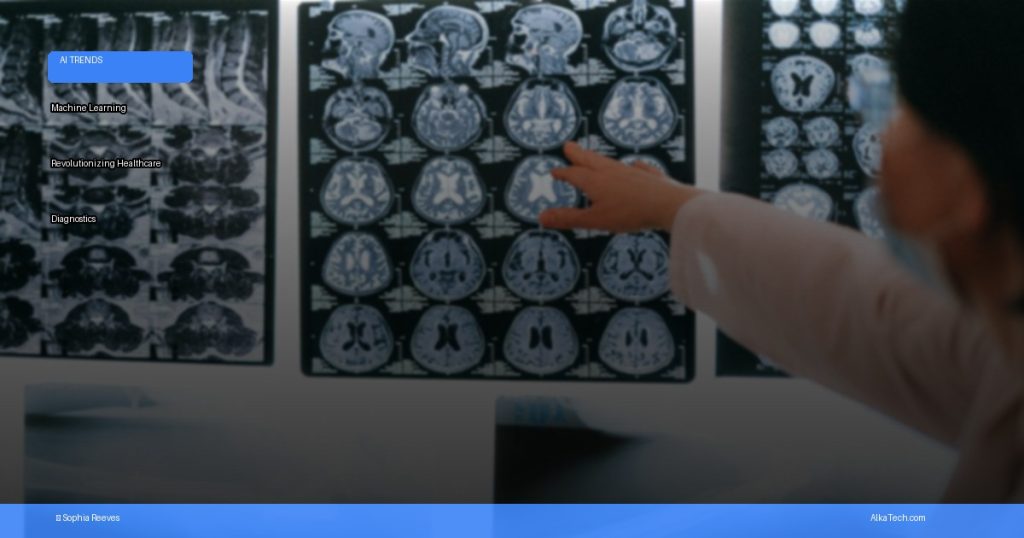
The landscape of modern medicine is undergoing a profound transformation, driven by an unlikely ally: artificial intelligence. Specifically, the integration of machine learning healthcare diagnostics is revolutionizing how diseases are identified, understood, and treated, promising a future of earlier detection and more personalized care. This isn’t just about faster analysis; it’s about uncovering patterns invisible to the human eye, predicting outcomes, and fundamentally enhancing clinical decision-making across the board.
📋 Table of Contents
The Diagnostic Revolution: Machine Learning Healthcare Diagnostics at Work
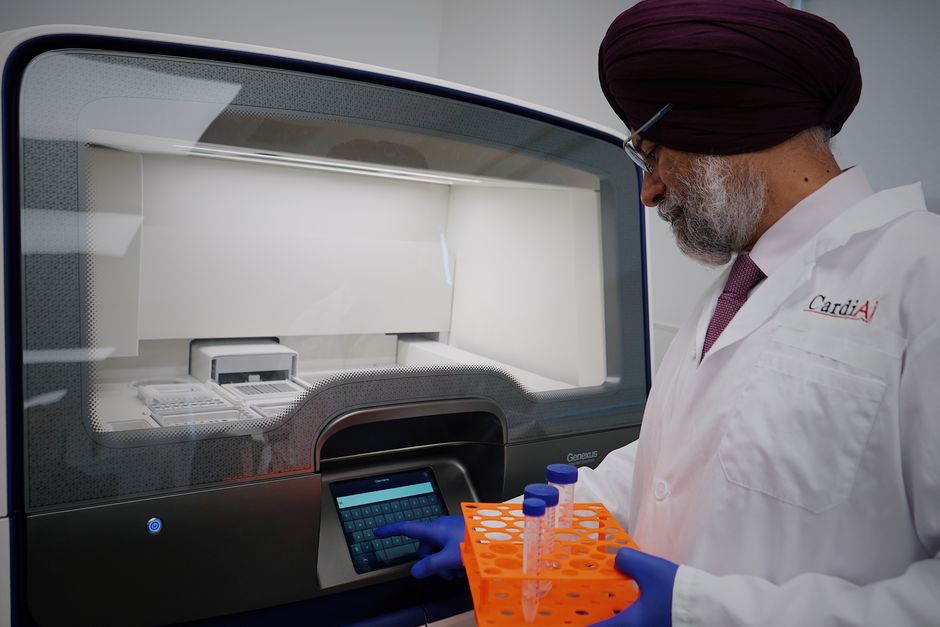
For decades, medical diagnostics relied heavily on the meticulous work of highly trained specialists interpreting complex data. While indispensable, human analysis can be time-consuming and, on rare occasions, subject to subtle variations. Enter machine learning. Algorithms, trained on vast datasets of medical images, patient records, and genomic information, are now achieving – and in some cases, surpassing – human-level accuracy in specific diagnostic tasks. This capability is rapidly becoming a cornerstone of advanced healthcare, making diagnostics faster, more consistent, and ultimately, more reliable.
Supercharging Medical Imaging AI
One of the most immediate and impactful applications of machine learning in diagnostics is in the realm of medical imaging. From X-rays and CT scans to MRIs and ultrasounds, these technologies generate immense volumes of data. Traditionally, radiologists spend hours meticulously scrutinizing these images for anomalies. Now, medical imaging AI algorithms can pre-screen images, highlight suspicious areas, and even quantify changes over time with remarkable precision.
- Tumor Detection and Characterization: ML models are adept at identifying subtle lesions, distinguishing between benign and malignant growths, and tracking tumor response to treatment, often flagging abnormalities earlier than human counterparts.
- Disease Progression Monitoring: In chronic conditions like multiple sclerosis or Alzheimer’s, AI can monitor minute changes in brain structure or lesion size, providing objective measures of disease progression or treatment efficacy.
- Reducing Workload: By prioritizing critical cases or pre-analyzing complex scans, AI tools help radiologists manage heavy workloads, allowing them to focus their expertise where it’s most needed.
Precision Pathology and Digital Microscopy
Beyond macroscopic imaging, machine learning is making significant inroads into pathology. Digital pathology, where tissue samples are scanned into high-resolution images, provides the perfect canvas for AI. ML algorithms can analyze these digital slides to identify cancerous cells, grade tumors, and detect other pathological markers with astounding speed and accuracy. This not only accelerates diagnosis but also helps reduce inter-observer variability among pathologists, leading to more consistent results globally.
Predictive Analytics Healthcare: Proactive Interventions
The power of machine learning extends beyond simply identifying current conditions; it delves into the future. Predictive analytics healthcare leverages ML algorithms to forecast patient outcomes, identify individuals at high risk for certain diseases, and even predict the effectiveness of different treatment pathways. This shift from reactive to proactive care is perhaps one of the most transformative aspects of AI in medicine. (See also: AI in Customer Service: Automating Support for Modern Businesses)
Genomics and Personalized Medicine
The human genome, a vast instruction manual for life, holds incredible potential for personalized medicine. However, interpreting its billions of base pairs is a monumental task. Machine learning excels here, sifting through genomic data to identify genetic markers associated with specific diseases, predict an individual’s susceptibility to certain conditions, or determine how a patient might respond to particular drugs. This enables the creation of highly tailored treatment plans, moving away from a ‘one-size-fits-all’ approach.
- Drug Response Prediction: Identifying patients likely to respond well or poorly to specific medications based on their genetic profile.
- Rare Disease Diagnosis: Pinpointing genetic mutations responsible for elusive rare diseases, often after years of inconclusive diagnoses.
Early Disease Detection and Biomarker Discovery
Imagine being able to detect diseases like cancer or heart disease long before symptoms even appear. ML algorithms are being trained on massive datasets that include blood tests, physiological measurements (from wearables), and electronic health records to identify subtle patterns and novel biomarkers indicative of early disease onset. This early warning system opens the door for timely interventions, dramatically improving patient prognoses. (See also: Jurassic Insect Calls Recreated with AI & Fossils: A Startling Discovery)
- Cardiovascular Risk Assessment: Predicting heart attacks or strokes years in advance by analyzing various health metrics.
- Diabetic Retinopathy Screening: Automated analysis of retinal images to detect early signs of diabetic eye disease, preventing blindness.
Challenges and Ethical Considerations
While the promise of machine learning in healthcare diagnostics is immense, its implementation is not without challenges. Data privacy and security are paramount, given the sensitive nature of health information. Ensuring algorithmic fairness and preventing bias, especially when training data might not be representative of all demographics, is crucial. Regulatory frameworks need to evolve to keep pace with these rapidly advancing technologies, and seamless integration into existing healthcare workflows requires significant planning and investment. Moreover, AI is a tool to augment human expertise, not replace it; the human touch, empathy, and critical judgment of medical professionals remain indispensable.
The Future is Now for AI in Medicine
The integration of machine learning into healthcare diagnostics is no longer a futuristic concept; it is happening right now, reshaping the very fabric of medical practice. From enhancing the precision of medical imaging and pathology to unlocking the potential of personalized medicine through genomic analysis and predictive analytics, AI in medicine is ushering in an era of unprecedented accuracy, efficiency, and proactive care. As these technologies mature and become more widely adopted, we can anticipate a future where diagnoses are faster, more reliable, and ultimately, lead to better health outcomes for everyone. The promise of machine learning isn’t just to treat illness, but to foster a healthier world.
❓ Frequently Asked Questions
How is machine learning used in healthcare diagnostics?
Machine learning algorithms analyze vast amounts of medical data (like imaging, genomics, EHRs) to identify patterns, assist in disease detection, and predict health outcomes more accurately.
What are the benefits of using ML in medical diagnostics?
Benefits include earlier and more accurate disease detection, personalized treatment recommendations, reduced human error, and improved efficiency in analyzing complex medical data.
Which areas of healthcare diagnostics are most impacted by ML?
ML is significantly impacting areas such as radiology (e.g., cancer detection), pathology, ophthalmology, cardiology, and predicting disease progression from patient data.
What challenges exist for implementing ML in healthcare diagnostics?
Challenges include data privacy and security, regulatory approval, the need for large, diverse datasets, ensuring algorithmic fairness, and integrating new technologies into existing clinical workflows.



Leave a Reply