Jurassic Insect Calls Recreated with AI & Fossils: A Startling Discovery
admin
1 month ago
Imagine standing in a primeval forest, 165 million years ago. What alien symphony would have filled the air? For centuries, this has been a question confined to the realm of imagination, but groundbreaking research is now turning speculation into sonic reality. Scientists have recently achieved the incredible feat of reconstructing Jurassic insect sounds AI, a startling discovery that reveals the surprisingly complex soundscapes of our planet’s distant past. This revolutionary project, leveraging the power of artificial intelligence, high-precision lasers, and painstakingly analyzed fossil wings, is redefining our understanding of ancient ecosystems and showcasing the transformative potential of AI in unlocking Earth’s deepest secrets.
📋 Table of Contents
The very idea of hearing the chirps and stridulations of creatures that roamed the Earth alongside dinosaurs feels like something out of a science fiction novel. Yet, thanks to an interdisciplinary team, the echoes of the Jurassic period are no longer silent. Published recently, this research provides an auditory window into an era dominated by colossal reptiles, revealing that the tiny insects beneath their feet were producing sounds that challenge our preconceptions about ancient life. (See also: Spot Phishing Emails: Protect Yourself from Online Scams)
Unlocking Ancient Harmonies: Jurassic Insect Sounds AI and Paleoacoustics
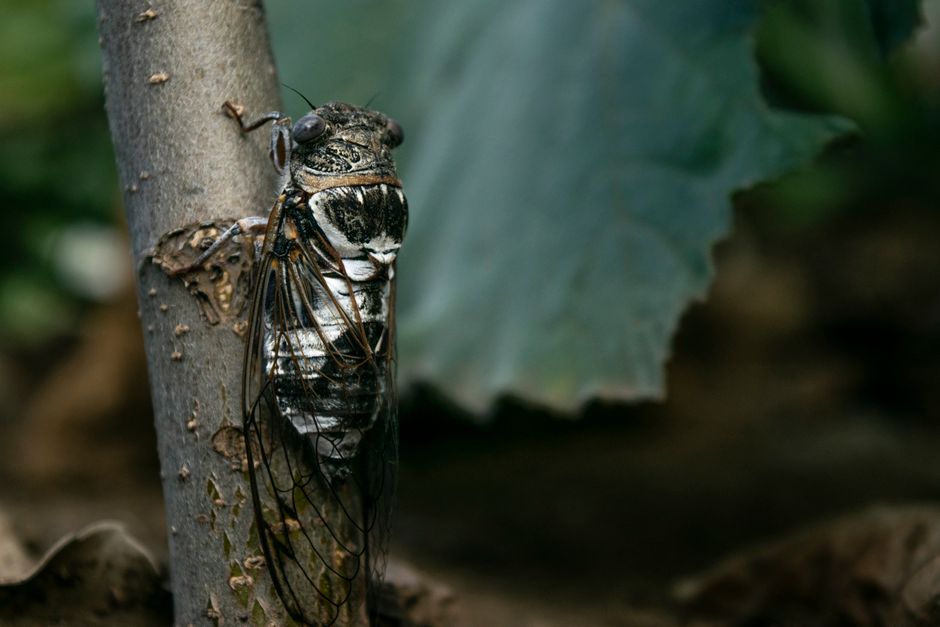
The journey to recreate these ancient sounds began not with a time machine, but with meticulously preserved fossils. Specifically, the wings of nine extinct Jurassic insects, dating back 165 million years, held the key. These aren’t just any wings; they are exceptional specimens where the intricate, microscopic structures responsible for sound production – known as stridulatory organs – were preserved in remarkable detail. For creatures like crickets and grasshoppers, these organs consist of a “scraper” and a “file” that, when rubbed together, produce their characteristic calls.
This is where the nascent field of paleoacoustics truly shines. Researchers employed advanced imaging techniques, including laser scanning and micro-CT scans, to create incredibly precise 3D models of these fossilized structures. The resolution achieved was paramount, allowing them to measure minute features like the number of teeth on a file, their spacing, and the overall dimensions of the sound-producing apparatus. These measurements are crucial because they directly influence the frequency and character of the sound produced.
To translate these physical structures into audible signals, the team looked to modern analogues. By studying living insects with similar stridulatory mechanisms, they developed algorithms and computer simulations that could predict the sound output based on the fossilized morphology. This process is inherently complex, requiring an understanding of biomechanics, material science (even for fossilized chitin!), and acoustics. It’s a testament to the ingenuity of the scientific method, blending traditional paleontological analysis with cutting-edge engineering and computational power.
The AI Revolution: Deciphering Jurassic Insect Sounds
The sheer volume of data, the complexity of the morphological analysis, and the need for accurate predictive modeling made this project a perfect candidate for artificial intelligence. AI models were instrumental in several key stages. Firstly, machine learning algorithms were trained on vast datasets of modern insect stridulations and their corresponding anatomical structures. This allowed the AI to identify subtle patterns and relationships that human analysis alone might miss, significantly enhancing the accuracy of the fossil sound reconstruction.
Secondly, AI played a crucial role in simulating the physical act of stridulation. By inputting the precise 3D models of the fossilized wings, AI-driven simulations could predict the vibrational frequencies and acoustic properties of the sounds produced. This wasn’t just about recreating a noise; it was about understanding the specific harmonic content, amplitude, and temporal patterns of these ancient calls. The AI acted as a sophisticated translator, converting static fossilized data into dynamic, audible information. This represents a significant leap forward for AI in paleontology, moving beyond mere data analysis to active reconstruction and simulation of biological processes. (See also: Master Keyboard Shortcuts: Windows, Mac, Linux Power Users Guide)
Laser Precision: The Eyes That Heard the Past
It’s worth emphasizing the role of lasers in this intricate process. The minute details of insect wings – structures sometimes just micrometers in size – require extreme precision for accurate measurement. Laser scanning provided non-invasive, high-resolution 3D models of the fossil surfaces. This allowed researchers to virtually “dissect” and analyze the stridulatory organs without damaging the priceless specimens. The data gleaned from these laser scans formed the foundational input for the AI models and simulations, proving that sometimes, the most advanced tools are needed to illuminate the most ancient mysteries.
The Startling Discovery: Pure Tones in a Primeval World
The most astonishing revelation from this research was the nature of the sounds themselves. Contrary to what might be expected from such ancient creatures, many of the reconstructed calls were not simple clicks or buzzes, but surprisingly pure, high-frequency tones. Some of these Jurassic insects produced calls that were strikingly similar to a single, sustained musical note.
This discovery is significant for several reasons. Pure tones require a highly specialized and efficient sound-producing mechanism. It suggests a level of evolutionary sophistication in acoustic communication much earlier than previously thought. Why would ancient insects evolve to produce such specific, clear sounds? The implications are profound. Pure tones are excellent for long-distance communication in dense environments, for attracting mates, or for warning off predators. This suggests that the acoustic landscape of the Jurassic forest was far from a chaotic cacophony; it was a nuanced soundscape where specific signals were crucial for survival and reproduction.
This challenges the long-held assumption that early animal communication was simplistic. It paints a picture of complex sensory worlds for creatures living millions of years before humans, suggesting that the drive for efficient communication has been a powerful evolutionary force across diverse life forms and geological eras.
Beyond the Chirp: The Future of Jurassic Insect Sounds AI
This groundbreaking research does more than just let us hear a 165-million-year-old chirp; it opens up entirely new avenues for scientific inquiry. The methodology developed here – combining advanced imaging, AI, and comparative biology – can potentially be applied to reconstruct the sounds of other extinct animals. Imagine hearing the footsteps of a dinosaur, the calls of ancient birds, or even the rustle of prehistoric plants. While the challenges are immense, the success with Jurassic insects provides a powerful proof of concept.
Moreover, this work significantly enriches our understanding of ancient ecosystems. The presence of specific insect calls implies complex social structures, predator-prey dynamics, and even environmental conditions. It allows us to build a more complete, multisensory picture of the past, moving beyond purely visual reconstructions to an immersive sonic experience.
The collaboration between paleontologists, acousticians, engineers, and AI specialists highlights the power of interdisciplinary research. As a tech journalist and AI enthusiast, I find this particularly exciting. It demonstrates how AI, when applied thoughtfully and innovatively, can transcend traditional boundaries, allowing us to ask and answer questions that were once considered unanswerable. The ability to listen to a world that existed before mammals dominated, before flowers bloomed, and before continents drifted to their modern positions, is nothing short of miraculous. The silent past is gaining a voice, and AI is its modern interpreter, offering us an unprecedented chance to truly hear the echoes of time.
❓ Frequently Asked Questions
How did scientists recreate Jurassic insect sounds?
Scientists recreated Jurassic insect sounds by analyzing fossilized wings for sound-producing structures, utilizing lasers, AI, and computer simulations based on modern insect studies.
What technology was used to reconstruct ancient insect calls?
The reconstruction of ancient insect calls primarily involved advanced AI algorithms, precision lasers to analyze fossil structures, and sophisticated computer simulations.
What surprising discovery was made about Jurassic insect calls?
Researchers made the startling discovery that some extinct Jurassic insects produced surprisingly pure tone calls, unlike many modern insects.
How old are the insect sounds that were recreated?
The recreated insect sounds are 165 million years old, dating back to the Middle Jurassic period.



Leave a Reply