Cloud Gaming in 2025: Can It Finally Replace Your Console?
admin
3 weeks ago
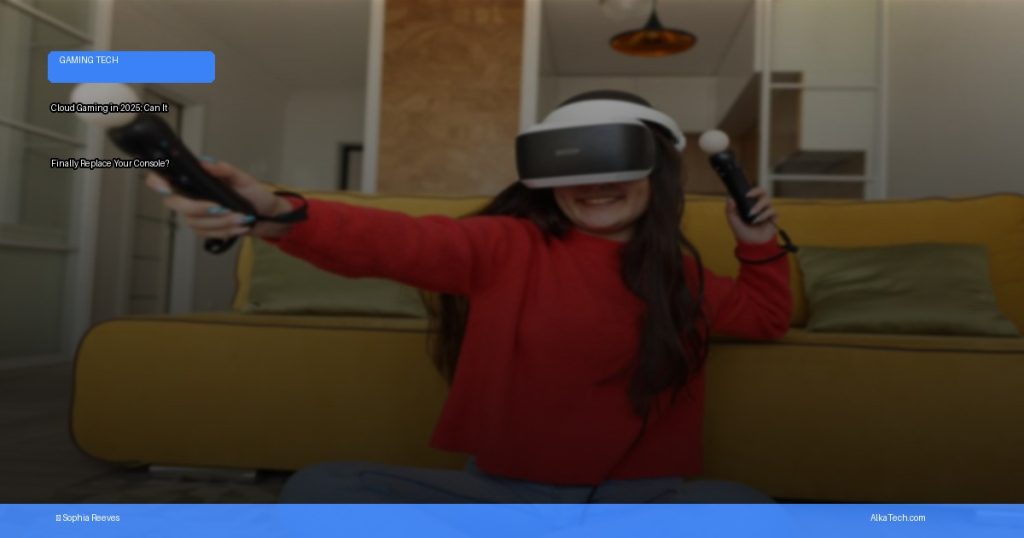
The promise of gaming without expensive hardware, accessible anywhere, has been the holy grail of the industry for decades. As we look at Cloud Gaming 2025, the perennial question resurfaces: is it finally good enough to replace a traditional console? This isn’t just a technical query; it’s about shifting paradigms, consumer expectations, and the very definition of what it means to “own” your gaming experience.
📋 Table of Contents
The State of Cloud Gaming 2025: A Look Under the Hood
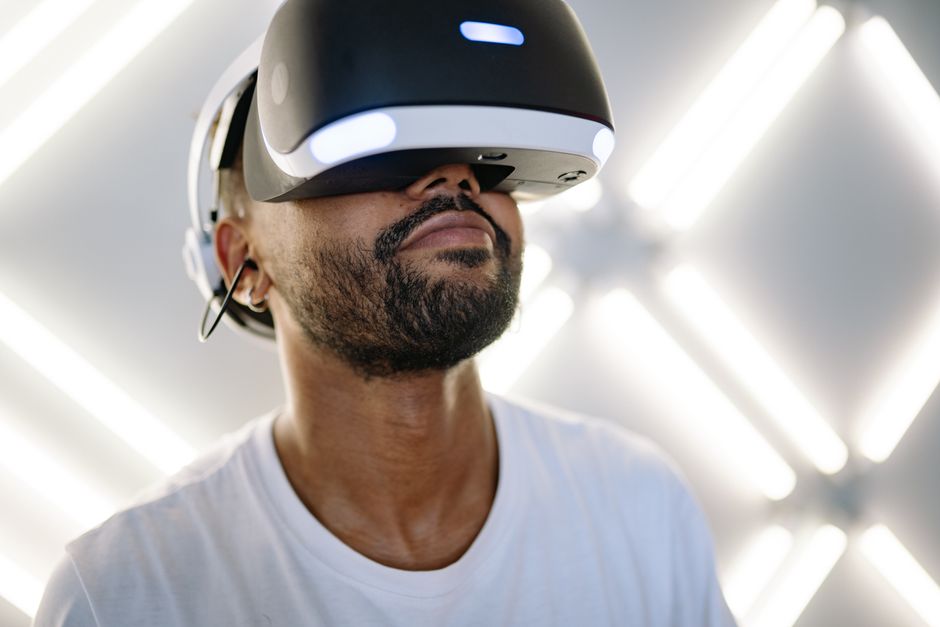
Fast forward to 2025, and the landscape of game streaming has matured significantly. Services like NVIDIA GeForce NOW, Xbox Cloud Gaming, and PlayStation Plus Premium have continued their fierce competition, pushing innovation in server infrastructure, streaming codecs, and network optimization. We’re seeing more widespread adoption of dedicated cloud gaming hardware within data centers, closer proximity to end-users (edge computing), and advanced compression algorithms like AV1 becoming standard, dramatically reducing bandwidth requirements while maintaining visual fidelity.
The days of blurry visuals, input lag, and constant disconnects are largely behind us, especially for those with stable, high-speed internet connections. The technology has evolved past its nascent, often frustrating, early iterations. Modern cloud gaming platforms in 2025 are capable of delivering experiences that, for many, are indistinguishable from local play, particularly in slower-paced or graphically demanding single-player titles. The improvements aren’t just incremental; they represent a fundamental leap in reliability and performance, paving the way for Cloud Gaming 2025 to become a truly viable option.
Latency, Bandwidth, and the User Experience
Despite the advancements, the immutable laws of physics still dictate certain limitations. Latency, though drastically reduced, remains the biggest hurdle for a complete console replacement. For competitive esports titles or fighting games where milliseconds matter, even the most optimized cloud solution in 2025 will introduce a minute amount of delay that dedicated local hardware avoids. However, for the vast majority of games – RPGs, adventure, strategy, even many action titles – this residual latency is now imperceptible to the average gamer.
Bandwidth requirements have also become more manageable, but a robust internet connection is still non-negotiable. Fiber optic connections are the ideal, but even decent cable internet can now deliver a smooth experience. The reliance on a stable, low-ping connection means that gamers in rural areas or those with inconsistent Wi-Fi will still find the experience frustrating. The user experience is intrinsically tied to one’s internet infrastructure, making it a democratizing force for some and a persistent barrier for others.
Cloud Gaming 2025 vs. Traditional Consoles: The Showdown
The core question of whether Cloud Gaming 2025 can replace a console boils down to a comparison across several key metrics: cost, game library, performance consistency, ownership, and flexibility. Traditional consoles offer a fixed, high-performance experience, a dedicated gaming environment, and the ability to truly ‘own’ your games, whether physically or digitally. (See also: NVIDIA’s Impact on Gaming in 2025: Reshaping the Landscape)
Cloud gaming, on the other hand, offers unparalleled flexibility and a significantly lower barrier to entry. No need to shell out hundreds of dollars for a new console every few years. Your smart TV, smartphone, tablet, or even a low-spec laptop can become a gaming powerhouse, streaming AAA titles without breaking a sweat. This accessibility is cloud gaming’s strongest argument for replacement, particularly for casual gamers or those on a budget who can’t justify the upfront console cost.
Game Libraries and Exclusivity: A Persistent Hurdle?
One of the most significant advantages consoles maintain is their exclusive game libraries. Sony and Microsoft continue to invest heavily in first-party titles that are often only available on their respective platforms. While cloud gaming services have expanded their catalogues dramatically, offering hundreds of titles, the fragmentation of content across different services and the absence of certain console exclusives remains a hurdle for a complete replacement.
Will we see a future where all major publishers embrace cloud streaming universally, or will exclusivity remain a key differentiator? In 2025, the answer is still mixed. While many third-party games are readily available on multiple cloud platforms, the allure of specific console exclusives means that for dedicated fans of those franchises, a traditional console is still a necessity. Cloud gaming primarily offers access, not ownership, which also changes the value proposition for many. (See also: Xbox’s Disc-to-Digital Feature: A 15-Year Journey of Innovation)
Cost-Effectiveness and Accessibility: The Cloud’s Strongest Play
Where cloud gaming truly shines as a console replacement is in its cost-effectiveness and accessibility. The subscription model, often bundled with other services or offering tiered access, provides an affordable entry point to a vast library of games. For the price of one or two new console games per year, you can access an entire catalogue via cloud streaming. This democratizes high-fidelity gaming, allowing millions more people to enjoy experiences that were previously out of reach due to hardware costs.
The ability to pick up and play a graphically intensive game on a tablet during a commute, or seamlessly switch to a smart TV in the living room, is a powerful draw. It caters to a modern lifestyle where content is consumed across multiple devices, breaking the tether to a single gaming box under the TV. For many, this flexibility and lower barrier to entry make cloud gaming a compelling alternative, if not a full replacement.
Beyond the Console: New Frontiers for Cloud Gaming
Cloud Gaming 2025 isn’t just about replacing consoles; it’s about expanding the very definition of gaming. It enables experiences beyond what traditional consoles can offer. Imagine gaming experiences baked directly into car entertainment systems, or interactive educational content streamed to classrooms. The cloud untethers gaming from dedicated hardware, allowing it to permeate new devices and scenarios, fostering new forms of interactive entertainment and engagement.
This expansion into new frontiers might be where cloud gaming finds its true calling, rather than a direct head-on collision with the established console market. It caters to a growing segment of casual gamers, families, and those who prioritize convenience and cost over absolute performance or ownership. It’s about making gaming ubiquitous, not just replacing a box.
The “Good Enough” Threshold: What Does It Mean to Replace?
Ultimately, whether cloud gaming is “good enough to replace a console” in 2025 depends entirely on the individual gamer and their priorities. For the hardcore enthusiast who demands pixel-perfect fidelity, zero latency, and the ability to own and collect physical games, cloud gaming might serve as an excellent supplement, but not a full replacement. For them, the console experience remains paramount.
However, for the vast majority – the casual gamer, the budget-conscious, the multi-device user, or someone simply looking to try out a wide range of titles without commitment – cloud gaming in 2025 has absolutely crossed the “good enough” threshold. It’s a robust, convenient, and increasingly high-quality way to play games, freeing users from the upgrade cycle and hardware limitations.
So, is Cloud Gaming 2025 finally ready to replace your console? For many, the answer is a resounding ‘yes,’ signifying a powerful shift towards accessibility and convenience in gaming. For others, particularly the most demanding players, it remains a fantastic alternative or companion. The future isn’t about one replacing the other entirely, but rather a dynamic ecosystem where cloud gaming thrives alongside, and often enhances, the traditional console experience, ushering in a new era of diverse gaming possibilities. The revolution might not be fully complete, but the foundations are undeniably solid.
❓ Frequently Asked Questions
Will cloud gaming truly replace traditional consoles by 2025?
While significant advancements are expected, a complete replacement is unlikely. Cloud gaming will likely be a strong alternative, but dedicated consoles will still offer advantages like offline play and top-tier performance.
What technological improvements will make cloud gaming better by 2025?
Expect improvements in latency reduction, more robust global internet infrastructure, advanced compression algorithms, and better server-side hardware, all contributing to a smoother, higher-fidelity streaming experience.
What are the main downsides of cloud gaming that might persist in 2025?
Potential downsides include dependence on stable, high-speed internet, concerns about game ownership versus access, and the environmental impact of large data centers, though these are continually being addressed.
How will bandwidth requirements for cloud gaming evolve by 2025?
While technology will improve efficiency, high-quality cloud gaming (e.g., 4K at 60fps) will still require substantial bandwidth, likely 50-100 Mbps, but better optimization might make lower resolutions more accessible with less.

Leave a Reply