AI Video Generation: Uncover What’s Real vs. Hype
admin
1 month ago

The screens across Silicon Valley are alight, buzzing with the latest marvel in artificial intelligence. From viral social media clips to impressive tech demos, it seems AI video generation tools are everywhere, promising to revolutionize content creation as we know it. But in a landscape often clouded by enthusiastic projections and bold claims, it’s crucial for us tech journalists—and indeed, for anyone looking to leverage this cutting-edge technology—to discern what is genuinely achievable right now with these AI video generation tools and what remains firmly in the realm of future aspiration, or even outright hype.
📋 Table of Contents
Having spent a decade navigating the ever-shifting currents of Silicon Valley and tracking global gadget trends, I’ve learned that innovation rarely follows a straight line. The journey of AI in video is no exception. While the progress has been breathtaking, outstripping predictions from even a year ago, there’s a significant chasm between a compelling demo reel and a tool that seamlessly integrates into complex, real-world production pipelines for diverse needs. Let’s dive into the reality of what these powerful generative AI video technologies offer today and where the industry is still catching up to its own ambitious vision. (See also: AI-Powered Research Uncovers 6 Unknown Structures at Earth’s Core-Mantle Boundary)
AI Video Generation Tools: The Current State of Play
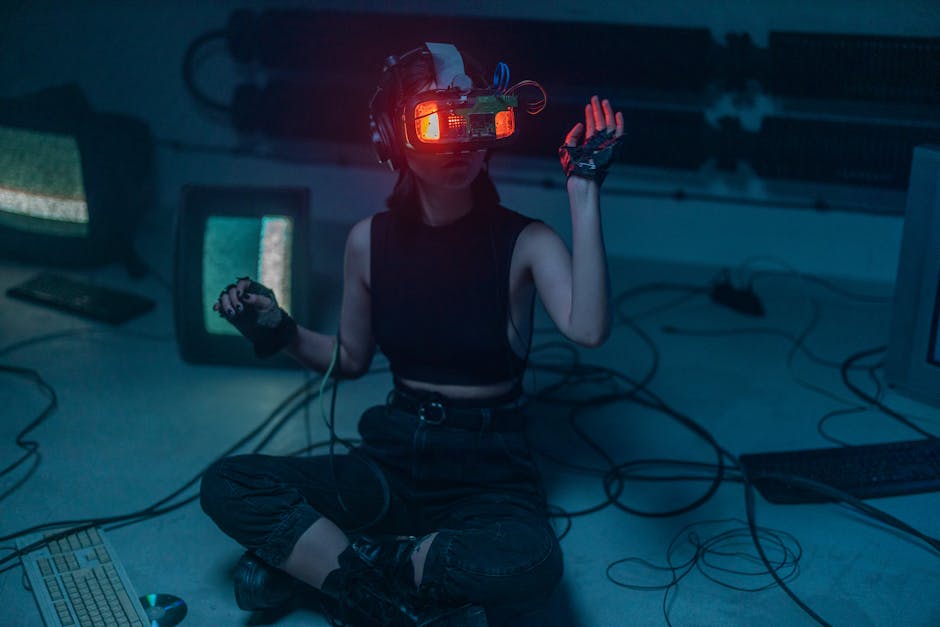
The capabilities of modern AI video generation tools are, without a doubt, impressive and rapidly evolving. We’ve moved far beyond simple deepfakes or basic motion graphics. Here’s what’s genuinely possible today:
Text-to-Video and Image-to-Video Generation
- Short-form Content Creation: Tools like RunwayML, Pika Labs, and Stability AI’s Stable Video Diffusion can now generate short video clips (typically a few seconds to a minute) from text prompts or still images. These are ideal for social media snippets, dynamic website backgrounds, or quick visual explainers.
- Style Transfer and Animation: Users can apply specific artistic styles to existing footage or animate still images with surprising fluidity. Think turning a photograph into a moving painting or transforming a drawing into a short animated sequence.
- Basic Scene Composition: AI video tools can create entire short scenes – from landscapes and cityscapes to abstract concepts – based on descriptive text. While not always perfectly photorealistic, the ability to conjure complex visual environments from scratch is a game-changer for concept artists and pre-visualization.
- Object and Character Manipulation: Many platforms allow for the insertion of new objects into existing footage, changing backgrounds, or even subtly altering character appearances and actions with surprising coherence.
Enhanced Editing and Production Assistance
- Automated Rough Cuts: AI can analyze scripts and footage to suggest initial edits, identify key moments, and even stitch together a preliminary timeline, significantly speeding up the editorial process.
- Upscaling and Restoration: Older, low-resolution footage can be upscaled and cleaned up using AI, breathing new life into archival material.
- Scene Extension and Inpainting: AI can intelligently fill in missing parts of a video frame or extend the boundaries of a shot, making creative adjustments or correcting errors much easier.
- Lip-Syncing and Voice Cloning: While ethically fraught, the technology to accurately lip-sync generated or translated audio to video, or even clone voices, is remarkably advanced, opening doors for localization and accessibility (and potential misuse).
The speed and accessibility of these AI video tools mean that content creators, marketers, and small businesses can produce visually engaging material without needing extensive animation skills, high-end equipment, or large budgets. This democratizing effect is a powerful, undeniable reality.
The Hype Cycle: What AI Video Generation Tools Aren’t (Yet)
Despite the incredible advancements, there’s a considerable gap between current capabilities and the often-touted promises of full creative autonomy and flawless realism. Here’s where the hype often outpaces reality:
“Hollywood-Quality” Feature Films on Demand
- Complex Narrative Coherence: While AI can generate stunning short clips, creating a consistent, emotionally resonant, and narratively coherent long-form video (e.g., a feature film or a documentary episode) remains firmly in the human domain. Maintaining character consistency, plot progression, and avoiding logical inconsistencies over extended periods is a monumental challenge for current AI.
- Fine-Grained Artistic Control: Achieving the precise shot composition, nuanced character performance, or specific lighting mood that a human director or cinematographer envisions is still difficult. AI often generates “good enough” but lacks the granular control needed for truly bespoke, artistic visions.
- Perfect Realism, Free of Artifacts: While improving, generated video often suffers from subtle “uncanny valley” effects, flickering, distorted textures, or outright bizarre artifacts upon close inspection. Photorealism is a moving target, and perfection is elusive, especially with complex subjects or rapid movement.
Complete Replacement of Human Creativity
- Intuition and Emotion: AI can generate visuals, but it doesn’t understand the emotional depth, cultural context, or nuanced storytelling required to truly move an audience. Human empathy and creative intuition are still irreplaceable for crafting compelling narratives.
- Problem Solving and Adaptability: When creative challenges arise – a scene isn’t working, an actor’s performance falls flat, or a script needs a rewrite – human creativity and problem-solving skills are essential. AI can offer variations but lacks the capacity for truly innovative conceptual shifts.
Instant, Effortless Production of Complex Content
- Significant Human Input Still Required: While AI automates parts of the process, it still requires skilled human operators to refine prompts, curate outputs, stitch clips together, add sound design, and perform traditional post-production. It’s an augmentation, not a full replacement.
- Computational Costs and Time: Generating high-quality, longer-form video is computationally intensive and can still take considerable time, despite advancements. It’s not an instant, zero-effort button for every project.
The Future of AI Video Generation Tools: Augmentation, Not Annihilation
Looking ahead, the trajectory of AI video generation tools is clear: greater control, enhanced realism, and improved coherence over longer durations. We can expect interfaces to become more intuitive, allowing creators to guide AI with more precision, moving beyond simple text prompts to interactive 3D scene manipulation and sophisticated style guides.
The real power of this AI video technology lies not in replacing human creativity, but in augmenting it. Imagine a future where a filmmaker can rapidly prototype countless visual ideas, generate complex background elements on demand, or quickly animate secondary characters, freeing up human artists to focus on core storytelling and primary character performances. This collaborative model, where AI handles the heavy lifting of generation and iteration, and humans provide the vision, direction, and emotional intelligence, is where the true revolution lies.
From independent creators to major studios, AI video tools are poised to reshape workflows, reduce bottlenecks, and democratize access to sophisticated visual production. However, navigating this new frontier requires a discerning eye, understanding that while the possibilities are vast, the journey from impressive demo to industry standard is paved with nuanced challenges and the enduring necessity of human ingenuity. The hype might grab headlines, but it’s the tangible, practical advancements that will truly transform how we tell stories with moving images. (See also: Jurassic Insect Calls Recreated with AI & Fossils: A Startling Discovery)
❓ Frequently Asked Questions
What are AI video generation tools?
AI video generation tools use artificial intelligence to create videos from text, images, or other inputs, automating aspects of video production.
How realistic are AI-generated videos currently?
While rapidly improving, current AI-generated videos vary in realism. Short clips can be impressive, but longer, complex narratives still face challenges.
What are the main limitations of current AI video tools?
Limitations include generating consistent characters, precise control over complex scenes, handling long-form content, and avoiding occasional visual artifacts.
Which industries benefit most from AI video generation?
Marketing, content creation, education, e-commerce, and corporate training are key industries leveraging AI video for efficiency and scalability.



Leave a Reply