Nintendo Switch Games: Performance Benchmarks & Review Verdict
admin
2 months ago
In the world of gaming, few consoles spark as much passionate debate as the Nintendo Switch. A marvel of portable design and ingenious versatility, it has redefined on-the-go gaming. But for us hardware enthusiasts and performance junkies, the burning question always boils down to one critical aspect: how does it actually run games? Today, we’re diving deep into a comprehensive Switch Games Performance review, dissecting frame rates, resolutions, and overall stability to deliver a definitive verdict on the console’s capabilities. Understanding the nuances of Switch Games Performance is key to appreciating both its triumphs and its technical limitations.
📋 Table of Contents
The Nintendo Switch, now several years into its lifecycle, continues to be a dominant force in the market. Yet, its unique hybrid nature and relatively modest hardware specs compared to its more powerful console brethren mean that not all games are created equal on the platform. From first-party masterpieces to ambitious third-party ports, the range of technical execution is vast. As a hardware reviewer and gaming enthusiast with years of experience dissecting PC and console tech, I’ve seen firsthand the magic Nintendo works, but also the inevitable compromises developers must make.
The Nintendo Switch Hardware Conundrum
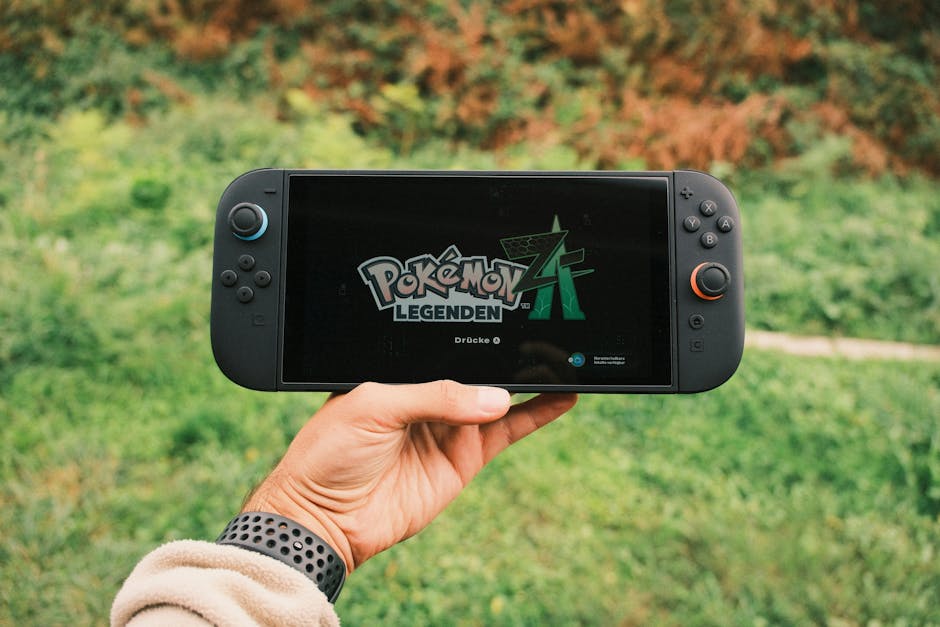
At the heart of the Nintendo Switch lies a custom Nvidia Tegra X1 system-on-a-chip. When it launched, this chip was a decent performer for a portable device, offering a balance of power and efficiency. However, in 2024, it’s undeniably showing its age. With just 4GB of RAM and a GPU that hovers around 393 GFLOPs (teraflops on next-gen consoles are in the double digits), the Switch is far from a graphical powerhouse. This hardware forms the baseline for all Nintendo Switch Games, presenting a unique challenge for developers aiming to deliver compelling experiences.
Developers face the monumental task of optimizing games for both docked (up to 1080p output) and handheld (720p screen) modes, all while maintaining acceptable frame rates. This often necessitates aggressive dynamic resolution scaling, pared-back textures, reduced draw distances, and fewer on-screen effects. The question isn’t usually “can it run it?” but “how well can it run it?”
Benchmarking First-Party Switch Games Performance
Nintendo’s internal development teams are masters of optimization, consistently delivering some of the best Switch games performance on the platform. They know the hardware inside and out, crafting experiences that leverage its strengths while mitigating its weaknesses. Their titles serve as the gold standard for what the console can achieve.
The Legend of Zelda: Tears of the Kingdom / Breath of the Wild
- Both these monumental open-world adventures generally target 30 frames per second (fps).
- While largely stable, there are noticeable dips, particularly in graphically intensive areas, during complex combat encounters, or when utilizing specific abilities (e.g., Ultrahand in Tears of the Kingdom).
- Resolution often dynamically scales, hovering around 900p docked and 720p handheld, dropping lower in demanding scenes.
- Despite the occasional stutter, the sheer scale and ingenuity of these games make the performance trade-offs entirely acceptable for most players.
Super Mario Odyssey
- A shining example of excellent optimization, Super Mario Odyssey largely maintains a silky-smooth 60fps in both docked and handheld modes.
- Resolution typically stays at 900p docked and 720p handheld, with very few compromises.
- This is a testament to Nintendo’s ability to create visually stunning games with stylized art directions that are less taxing on hardware.
Mario Kart 8 Deluxe
- Arguably the most polished performer on the system, Mario Kart 8 Deluxe runs at a near-flawless 60fps, even with four players in split-screen.
- Resolution is a solid 1080p docked and 720p handheld.
- Its consistent performance and vibrant visuals make it a benchmark for how well Nintendo Switch Games can run when expertly optimized.
These first-party titles demonstrate that when developed with the Switch’s unique architecture in mind, the results can be truly exceptional, showcasing the console’s potential for seamless gameplay.
Third-Party Performance: Hits and Misses in Switch Games Performance
This is where the waters get murky. Third-party developers, often porting games from more powerful consoles, face significant hurdles. The effort and expertise required to downscale complex engines and assets can vary wildly, leading to a spectrum of performance outcomes. (See also: Boost Gaming Performance: Optimize Windows for Ultimate FPS)
Impressive Feats: When Developers Go Above and Beyond
- DOOM (2016) / DOOM Eternal: Panic Button’s ports are legendary. While sacrificing significant resolution (often sub-720p handheld, sub-900p docked) and visual fidelity, they manage to deliver a consistent 30fps experience for fast-paced shooters. A true technical marvel.
- The Witcher 3: Wild Hunt – Complete Edition: CD Projekt Red and Saber Interactive achieved the seemingly impossible. Running a sprawling open-world RPG like The Witcher 3 on the Switch, even with visual compromises and a variable 30fps (often dipping lower in busy towns), is an incredible feat.
- Cuphead: Another triumph, running flawlessly at 60fps with its unique hand-drawn art style.
Struggles and Compromises: The Less Fortunate Ports
- Apex Legends: While playable, it often struggles to maintain its 30fps target, particularly in busy combat scenarios. Resolution can drop significantly, making it harder to spot distant enemies.
- Fortnite: Generally good, but intense build battles or large-scale events can cause noticeable frame rate drops, especially when playing docked.
- Cloud Versions (e.g., Kingdom Hearts series, Control, Guardians of the Galaxy): These games don’t actually run on the Switch hardware. They stream from remote servers, requiring a robust internet connection. While they offer access to graphically demanding titles, they introduce input lag and are entirely dependent on network stability, making them a niche solution rather than true native ports.
The disparity in third-party Switch Games Performance highlights the importance of developer commitment and expertise. Some studios invest heavily in optimization, while others struggle to adapt their engines to the Switch’s unique limitations. (See also: Cloud Gaming in 2025: Is it Finally Good Enough to Replace Consoles?)
Factors Influencing Switch Games Performance
Beyond the raw hardware, several elements dictate how well a game performs on the Nintendo Switch:
- Developer Skill & Optimization: This is paramount. A well-optimized game can look and run far better than a graphically superior title ported poorly.
- Art Style: Stylized, less photorealistic art directions (like Mario Odyssey or Splatoon 3) often fare better, as they require less raw processing power to render effectively.
- Game Engine: Some engines are more adaptable to the Switch’s architecture than others. Custom engines or highly scalable ones tend to perform better.
- Dynamic Resolution Scaling (DRS): This technique allows the game to adjust its rendering resolution on the fly to maintain a target frame rate. It’s crucial for many demanding Switch titles.
- Docked vs. Handheld: Games typically run at a higher resolution and sometimes a more stable frame rate when docked due to increased clock speeds available when connected to power.
The Verdict on Switch Games Performance
After years of playing and reviewing countless switch games, my verdict on their performance is nuanced. The Nintendo Switch is a console of compromises, but often, these compromises are worth it. Nintendo’s first-party titles consistently deliver experiences that feel perfectly tailored to the hardware, showcasing what’s possible with dedicated optimization. They represent the best Switch games performance you can expect.
Third-party performance is a lottery. When done right, ports like DOOM and The Witcher 3 are nothing short of miraculous, offering playable versions of impossible games on the go. When done poorly, they can be frustrating, highlighting the console’s age and limitations.
Ultimately, the Switch’s unique selling proposition – its portability and versatility – often outweighs its technical shortcomings. For many gamers, the ability to play AAA titles on a plane or during a commute is a trade-off they’re more than willing to make, even if it means a lower resolution or a slightly less stable frame rate.
The Switch continues to defy expectations, proving that raw power isn’t the only metric for success. Its library of games, both technically brilliant and occasionally struggling, tells a compelling story of innovation meeting limitation. As we look towards the next generation of Nintendo hardware, one thing is clear: the lessons learned from optimizing for the Switch will undoubtedly shape the future of portable gaming performance.
❓ Frequently Asked Questions
What are the best performing Switch games?
Games like Mario Kart 8 Deluxe and Super Mario Odyssey are often cited for consistent 60fps performance, though results vary by title.
How do I check a Switch game’s performance?
The Switch lacks a built-in FPS counter; however, tech reviews and dedicated benchmark analyses often provide detailed performance data.
Does the Nintendo Switch OLED improve game performance?
The Switch OLED primarily enhances the screen quality. Its internal hardware is similar to the standard model, so game performance remains largely the same.
What causes frame rate drops on Switch games?
Frame rate drops can be due to graphically demanding scenes, unoptimized game code, or intense on-screen action exceeding the Switch’s processing capabilities.



Leave a Reply