How ML is Transforming Healthcare Diagnostics & Patient Care
admin
4 weeks ago
As a tech journalist with a keen eye on the convergence of innovation and real-world impact, few areas excite me as much as the profound transformation underway in healthcare. The advent of artificial intelligence, particularly machine learning healthcare diagnostics, is not just incremental; it’s revolutionary, fundamentally reshaping how we detect and understand disease. This paradigm shift promises earlier, more accurate diagnoses, paving the way for more effective treatments and ultimately, healthier lives.
📋 Table of Contents
For too long, medical diagnostics, while critical, have been constrained by human limitations – the sheer volume of data to process, the subtle patterns easily missed, and the variability in human interpretation. Machine learning algorithms, with their capacity to sift through vast datasets and identify intricate correlations, are now stepping in to augment and enhance the capabilities of medical professionals. From deciphering complex imaging scans to predicting disease risk based on genetic markers, the influence of ML is becoming ubiquitous.
Revolutionizing Medical Imaging with Machine Learning Healthcare Diagnostics
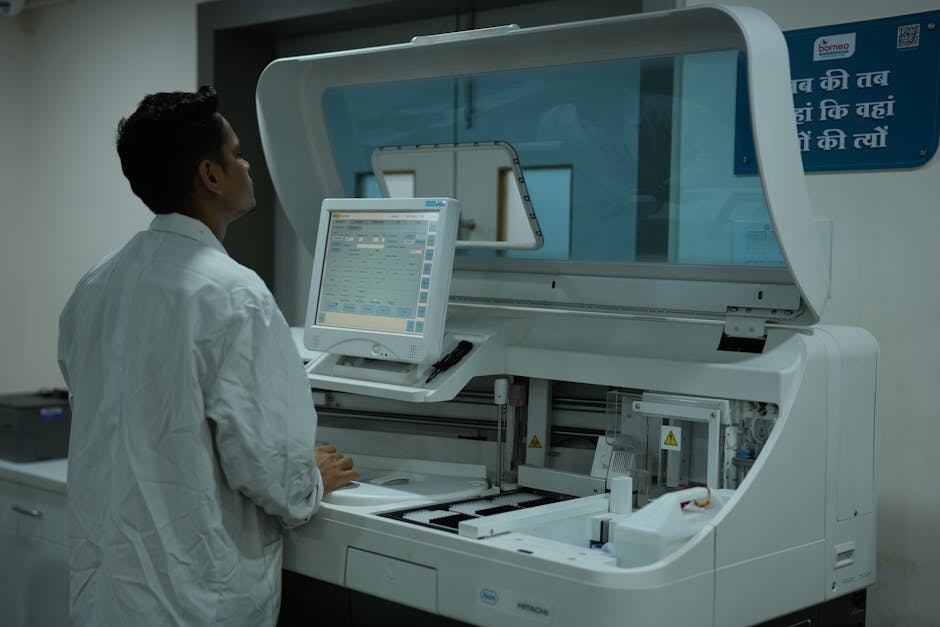
One of the most immediate and impactful applications of machine learning healthcare diagnostics is in the realm of medical imaging. Traditionally, radiologists and pathologists spend countless hours meticulously examining X-rays, CT scans, MRIs, and biopsy slides for anomalies. This process is highly skilled but also time-consuming and prone to human fatigue or subtle oversight, especially with the ever-increasing volume of studies.
Enter medical imaging AI. Deep learning, a subset of machine learning, has particularly excelled here. Algorithms trained on millions of annotated images can now identify cancerous lesions, fractures, or early signs of neurodegenerative diseases with remarkable accuracy, often matching or even exceeding the performance of human experts. Consider: (See also: AI Video Generation Tools: Reality vs. Hype in 2024)
- Radiology: AI systems can detect subtle lung nodules on CT scans indicative of early-stage cancer, or pinpoint cerebral microbleeds on MRI that might suggest a risk of stroke. They can prioritize urgent cases, alerting radiologists to studies with critical findings, thereby streamlining workflow and reducing diagnostic delays.
- Pathology: Digital pathology, combined with ML, allows algorithms to analyze vast whole-slide images of tissue biopsies. They can count cells, identify abnormal cell structures, and even grade the aggressiveness of tumors, providing crucial information for treatment planning.
- Ophthalmology: AI is already being used to screen for diabetic retinopathy, a leading cause of blindness, by analyzing retinal images. These systems can provide immediate, accurate assessments in primary care settings, bridging gaps in specialist access.
The beauty of these systems lies not just in their accuracy but in their consistency and speed. They act as an invaluable second pair of eyes, reducing variability and ensuring that critical findings are less likely to be missed.
Predictive Analytics: Unlocking Future Health Outcomes
Beyond image analysis, machine learning is proving instrumental in predictive analytics, transforming how we assess future health risks and detect diseases even before symptoms manifest. This facet of AI in healthcare leverages a broader spectrum of data, including:
- Electronic Health Records (EHRs): ML algorithms can scour years of patient data – diagnoses, medications, lab results, and demographic information – to identify patterns associated with the onset of chronic diseases like diabetes, heart failure, or kidney disease. This allows for proactive interventions.
- Genomic Data: As genomic sequencing becomes more accessible, ML is vital in interpreting this complex data. It can identify genetic markers associated with increased susceptibility to certain cancers, autoimmune disorders, or adverse drug reactions, enabling personalized prevention strategies.
- Wearable Devices and IoT: Data from smartwatches and other sensors (heart rate, sleep patterns, activity levels) can be analyzed by ML to detect subtle physiological changes that might precede a health event, such as an impending cardiac episode or the exacerbation of a chronic condition.
For instance, algorithms are being developed to predict the risk of sepsis in hospital patients hours before it becomes clinically apparent, giving medical teams a crucial window to intervene. Similarly, ML models can estimate a patient’s likelihood of readmission, allowing hospitals to allocate resources for targeted post-discharge care, improving outcomes and reducing costs.
Personalized Medicine and Treatment Pathways
The insights gleaned from advanced diagnostics powered by machine learning extend directly into personalized medicine. By providing a more precise understanding of a patient’s unique biological and risk profile, ML helps clinicians tailor treatment plans with unprecedented accuracy. This includes: (See also: The Rise of AI Agents: What They Are & How They Work)
- Optimal Drug Selection: Machine learning can predict how an individual patient might respond to different medications based on their genetic makeup, disease subtype, and other clinical data, minimizing trial-and-error and improving efficacy.
- Dosage Optimization: For conditions requiring precise medication levels, ML can help recommend individualized dosages, reducing side effects and maximizing therapeutic benefit.
- Proactive Disease Management: For chronic conditions, ML models can flag patients at high risk of disease progression or complications, prompting timely adjustments to their care plan.
This shift from a one-size-fits-all approach to highly individualized care represents a monumental step forward, enhancing both the effectiveness and efficiency of medical interventions.
Challenges and the Path Forward for AI in Healthcare
While the promise of AI in healthcare, particularly in diagnostics, is immense, its widespread adoption is not without hurdles. Key challenges include:
- Data Privacy and Security: Healthcare data is highly sensitive. Ensuring robust privacy protocols and secure data handling is paramount to maintaining patient trust and complying with regulations.
- Bias in Algorithms: If ML models are trained on biased datasets (e.g., predominantly from one demographic group), they can perpetuate and even amplify existing health disparities, leading to inaccurate diagnoses for underrepresented populations. Addressing this requires diverse, representative datasets and rigorous validation.
- Regulatory Approval: AI-powered diagnostic tools are complex medical devices, requiring thorough validation and regulatory clearance before they can be deployed in clinical settings.
- Integration into Workflow: Seamlessly integrating these new technologies into existing clinical workflows, training healthcare professionals, and ensuring user-friendliness are crucial for successful adoption.
- Explainable AI (XAI): Clinicians need to understand *why* an AI made a particular diagnosis or prediction. Developing explainable AI models is vital for trust, accountability, and clinical decision-making.
Overcoming these challenges requires a collaborative effort among technologists, clinicians, policymakers, and ethicists. The focus must always remain on augmenting human expertise, not replacing it, ensuring that AI serves as a powerful tool in the hands of compassionate healthcare providers.
The journey of machine learning healthcare diagnostics is still in its nascent stages, yet its impact is already undeniably transformative. We are moving towards a future where diseases are detected earlier, prognoses are more accurate, and treatments are precisely tailored to the individual. As Maya Patel, I’m incredibly optimistic about this synergy between technology and medicine. The continuous innovation in AI in healthcare promises not just to extend lifespans but to enrich the quality of life, making advanced, personalized medical care a reality for more people than ever before. This isn’t just a technological advancement; it’s a profound leap forward for humanity.
❓ Frequently Asked Questions
How is machine learning used in healthcare diagnostics?
Machine learning analyzes vast medical data, including images, patient records, and genomic sequences, to identify patterns, assist in disease detection, and predict health outcomes more accurately.
What are the key benefits of using ML in diagnostics?
Benefits include earlier and more accurate disease detection, improved efficiency in analyzing complex data, personalized treatment recommendations, and reduced diagnostic errors, leading to better patient outcomes.
Can machine learning improve medical imaging analysis?
Yes, ML algorithms excel at analyzing medical images (X-rays, MRIs, CT scans) to detect subtle anomalies, classify diseases, and help radiologists identify critical findings faster and with greater precision.
What challenges does ML face in healthcare diagnostics?
Challenges include ensuring data privacy and security, integrating ML models into existing clinical workflows, addressing algorithmic bias, and gaining regulatory approval and clinician trust.



Leave a Reply