How AI is Revolutionizing Software Development & Coding Workflows
admin
1 month ago
The world of software development is undergoing a seismic shift, one powered by the relentless march of artificial intelligence. If you’ve been following tech news, you’ve likely heard the buzz, but the reality of AI in software development is far more profound than just a few clever chatbots. It’s fundamentally reshaping how we write, test, and deploy code, promising a future where developers can achieve more with unprecedented speed and precision.
📋 Table of Contents
For decades, coding has been a largely manual, often painstaking process, demanding intense concentration and meticulous attention to detail. But AI is stepping in, not to replace the human element, but to augment it, transforming workflows and unlocking new levels of creativity and efficiency. At AlkaTech, we’re keenly observing these trends to help you navigate the evolving digital landscape safely and effectively.
The Dawn of AI in Software Development: From Autocomplete to Autocode
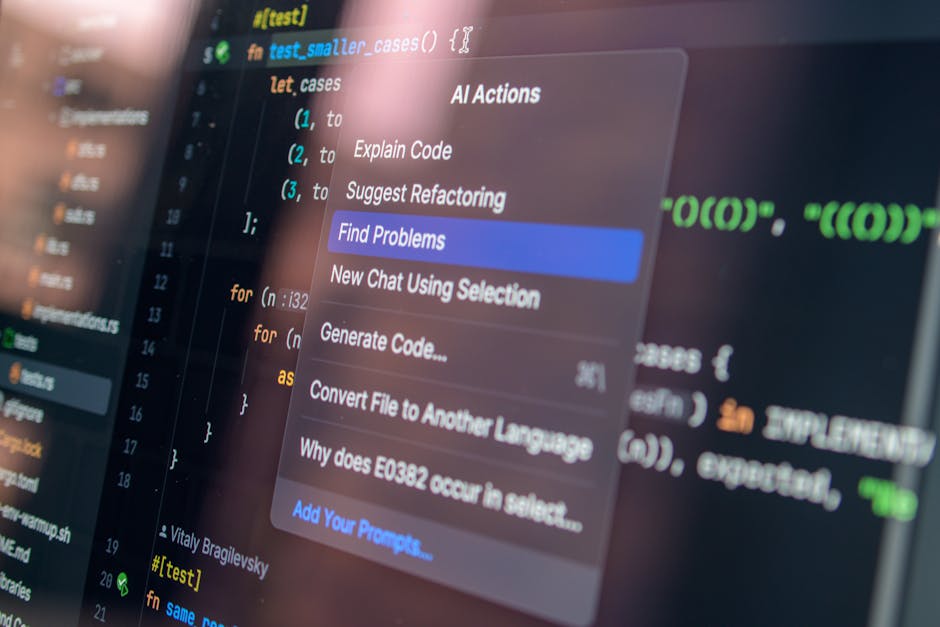
Gone are the days when AI in coding was limited to basic autocomplete suggestions. Today, AI in software development encompasses a sophisticated suite of tools capable of generating entire functions, debugging complex issues, and even refactoring existing codebases. These aren’t just parlor tricks; they are powerful assistants that integrate directly into a developer’s integrated development environment (IDE).
Leading the charge are advanced AI coding tools like GitHub Copilot, Amazon CodeWhisperer, and Tabnine, which leverage vast datasets of public code to offer contextual suggestions, complete lines of code, and even write entire blocks based on natural language prompts. Imagine describing what you want a function to do in plain English, and an AI assistant generates the boilerplate code for you. This capability significantly reduces the cognitive load on developers, allowing them to focus on higher-order problem-solving rather than syntax and boilerplate. (See also: Human-First AI: Procedural Logic for Augmented Learning – Part 2)
Boosting Developer Productivity and Efficiency
The most immediate and tangible benefit of integrating AI into coding workflows is the dramatic boost in developer productivity. Repetitive tasks, once a time sink, are now automated. Need to write a test case for a specific function? AI can generate a starting point. Stuck on a tricky bug? AI can analyze logs and suggest potential culprits or fixes. This frees up developers to dedicate their valuable time to innovative solutions, architectural design, and complex logic that truly requires human ingenuity.
- Faster Prototyping: AI can quickly scaffold new projects or features, enabling teams to iterate and test ideas at an accelerated pace.
- Reduced Boilerplate: Many programming tasks involve writing similar code repeatedly. AI takes over these mundane tasks, reducing errors and saving time.
- Contextual Assistance: AI provides real-time suggestions and documentation lookups, keeping developers in their flow state without needing to switch contexts.
Enhanced Code Quality and Security
As a cybersecurity expert, I’m particularly excited about AI’s potential to improve code quality and bolster security. AI-powered static analysis tools can scan code for vulnerabilities and bad practices with incredible speed and accuracy, often catching issues that might escape human review. These tools go beyond simple linting, understanding complex semantic patterns that indicate potential security flaws, memory leaks, or performance bottlenecks. (See also: Maximize Best Productivity Apps: Expert Tips & Tricks Guide)
Furthermore, AI can assist in automated code reviews, providing objective feedback and identifying areas for improvement, consistency, and adherence to best practices. This proactive approach to quality assurance means fewer bugs make it into production, leading to more robust, reliable, and secure software. For organizations dealing with sensitive data, this layer of AI-driven scrutiny is invaluable in mitigating risks.
Redefining the Role of Developers: The Future of Coding
The rise of AI in software development isn’t about replacing developers; it’s about elevating their role. The future of coding sees developers transitioning from being primarily code writers to becoming architects, orchestrators, and critical thinkers who leverage AI tools effectively. Their focus will shift from the minutiae of syntax to the bigger picture: understanding complex problems, designing elegant solutions, and critically evaluating the AI-generated code.
This paradigm shift necessitates new skills. Prompt engineering, the art of crafting precise instructions for AI, will become crucial. Developers will need to understand the capabilities and limitations of their AI assistants, learn how to refine AI outputs, and ensure that the generated code aligns with project goals and security standards. The human element of oversight, creativity, and ethical judgment remains paramount.
Challenges and Considerations
While the benefits are clear, we must also acknowledge the challenges. Over-reliance on AI can lead to a reduced understanding of underlying code, creating “black box” problems where developers might struggle to debug issues within AI-generated segments. There are also ethical concerns around intellectual property if AI models are trained on proprietary code without explicit permission. Security risks also exist if developers blindly trust AI-generated code without proper review, potentially introducing new vulnerabilities. It’s crucial for teams to establish clear guidelines for AI usage and maintain robust human review processes.
Practical Tips for Integrating AI into Your Workflow
Ready to embrace the AI revolution in your coding practice? Here are some actionable tips:
- Start Small: Don’t overhaul your entire workflow at once. Begin by experimenting with one or two AI coding tools for specific tasks, like generating unit tests or boilerplate code.
- Understand, Don’t Just Copy: Always review AI-generated code. Understand its logic, potential side effects, and ensure it aligns with your project’s architecture and security requirements. Treat it as a highly intelligent assistant, not an infallible oracle.
- Prioritize Security: Be mindful of what code you feed into AI tools, especially cloud-based ones. Understand their data privacy policies and ensure sensitive or proprietary information isn’t inadvertently exposed. For critical systems, consider self-hosted or more secure enterprise AI solutions.
- Continuous Learning: The AI landscape is evolving rapidly. Stay updated on new tools, techniques, and best practices. Participate in communities and share your experiences.
- Focus on High-Value Tasks: Leverage AI to automate the mundane, freeing yourself to concentrate on complex problem-solving, architectural design, and innovative features that truly differentiate your work.
The transformation of software development by AI is not a distant dream; it’s happening now. From boosting developer productivity to enhancing code quality and reshaping the very definition of a coder, AI is proving to be an indispensable partner. The future of coding is collaborative, intelligent, and more exciting than ever before. Developers who embrace these changes, understand the tools, and maintain a critical eye will be the ones leading the charge into this new era of digital innovation. Stay curious, stay secure, and keep coding smarter.
❓ Frequently Asked Questions
How does AI improve software development?
AI enhances software development through automated code generation, intelligent debugging, test case creation, and optimized workflow management, leading to faster and more efficient processes.
What AI tools are used in coding?
Popular AI coding tools include GitHub Copilot, Tabnine, ChatGPT (for code snippets), and various AI-powered debuggers, refactoring tools, and code review assistants.
Will AI replace human software developers?
While AI automates many coding tasks, it’s more likely to augment developers, allowing them to focus on complex problem-solving, design, and innovation, rather than outright replacing them.
What are the benefits of integrating AI into coding workflows?
Benefits include increased productivity, faster development cycles, reduced errors, improved code quality, enhanced security analysis, and better collaboration among development teams.



Leave a Reply