How AI Transforms Software Development & Coding Workflows
admin
2 months ago

The pace of innovation in the tech world often feels like trying to keep up with the latest console generation launch – exhilarating, relentless, and constantly pushing boundaries. Nowhere is this more apparent than in the fundamental craft of creating software itself. We’re standing at the precipice of a monumental shift, where AI software development isn’t just a futuristic concept but a burgeoning reality reshaping how every line of code is conceived, written, and deployed. This isn’t merely about incremental improvements; it’s a paradigm shift in how we approach the entire software development lifecycle, fundamentally transforming our workflows and the very definition of coding.
📋 Table of Contents
For decades, the image of a developer has been synonymous with long hours, complex syntax, and the solitary pursuit of bug-free code. While the intellectual rigor remains, the tools at our disposal are evolving at an unprecedented rate, powered by artificial intelligence. From intelligent autocompletion to sophisticated code generation, AI is no longer just a feature within applications; it’s becoming the underlying engine driving the development process itself. This deep dive will explore the revolutionary impact of AI on software development, examining its current applications and what the future holds for developers and the tech industry at large.
The Dawn of AI-Powered Coding and Developer Workflows
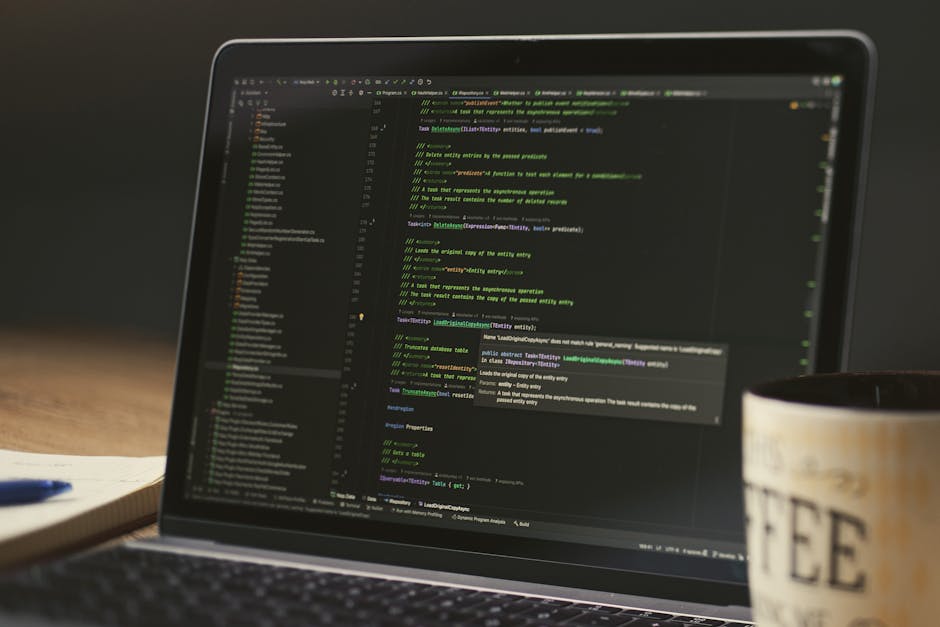
The journey of AI coding began subtly, perhaps with intelligent autocompletion that learned from your existing codebase. Today, it has blossomed into something far more sophisticated, acting as a co-pilot, an intelligent reviewer, and even a proactive problem-solver. This evolution is fundamentally altering core developer workflows.
Code Generation and Autocompletion
Tools like GitHub Copilot, Amazon CodeWhisperer, and Google’s Codey are prime examples of how AI is revolutionizing code generation. These large language models (LLMs), trained on vast repositories of public code, can suggest entire blocks of code, complete functions, or even generate boilerplates based on natural language prompts. This doesn’t just speed up typing; it significantly reduces the cognitive load on developers, allowing them to focus on higher-level architectural decisions and complex problem-solving rather than rote syntax. Imagine asking for a “Python function to connect to a PostgreSQL database and fetch user data,” and seeing a near-perfect snippet appear – that’s the power AI brings to the table.
Intelligent Debugging and Error Detection
One of the most time-consuming aspects of software development is debugging. AI is making strides here too, moving beyond simple static analysis. AI-powered debuggers can analyze code patterns, predict potential bugs before they even manifest, and even suggest specific fixes. They learn from vast datasets of past bugs and resolutions, offering insights that human developers might miss. This proactive error detection saves countless hours, improves code quality, and allows developers to deliver more robust software faster.
Automated Testing and Quality Assurance
Manual testing is tedious and often prone to human error. AI is transforming quality assurance by automating test case generation, execution, and even results analysis. AI can learn from user interaction patterns to create more realistic and comprehensive test suites, identify edge cases, and prioritize tests based on risk. This ensures higher code quality, fewer production issues, and frees up QA teams to focus on more strategic, exploratory testing.
Streamlining Developer Workflows with AI Software Development
Beyond direct coding assistance, AI software development extends its influence across the entire project lifecycle, streamlining workflows in ways that were once unimaginable, truly embodying the spirit of software engineering AI.
Requirements Gathering and Design
The initial phases of software development – understanding user needs and translating them into technical specifications – are notoriously challenging. AI is beginning to assist by analyzing user stories, converting natural language requirements into structured data, and even generating initial design proposals or architectural diagrams. This helps bridge the gap between business stakeholders and technical teams, ensuring clearer communication and a more efficient start to projects.
Code Refactoring and Optimization
Maintaining a clean, efficient, and scalable codebase is crucial. AI tools can analyze existing code for inefficiencies, identify areas for refactoring, and suggest optimizations for performance, memory usage, or readability. They can automatically apply best practices, ensuring consistency across large projects and making code easier to maintain and extend in the long run. This is like having an ever-vigilant senior engineer reviewing every commit. (See also: AI’s Impact on Software Development & Coding Workflows)
Documentation and Knowledge Management
Good documentation is often the first casualty of tight deadlines. AI can automatically generate documentation from code comments, function signatures, and even commit messages. It can keep documentation updated as the codebase evolves, ensuring that new team members can quickly get up to speed and that knowledge is effectively shared across the organization.
The Evolving Role of the Developer
With AI taking on more routine and repetitive tasks, the role of the human developer isn’t diminishing; it’s evolving. Developers are shifting from mere coders to architects of AI-assisted systems, focusing on higher-level problem-solving, creativity, and strategic thinking. Skills like prompt engineering, understanding and validating AI outputs, and effectively integrating AI tools into the development pipeline will become paramount. This transition elevates the developer to a more strategic position, akin to a skilled commander directing an elite squad of AI soldiers rather than a foot soldier himself. (See also: 10 Chrome Extensions to Supercharge Your Productivity in 2024)
Challenges and Ethical Considerations in AI Software Development
While the benefits are clear, the integration of AI into software development is not without its challenges. Issues around data privacy, the potential for AI models to perpetuate biases found in their training data, and intellectual property concerns related to AI-generated code are significant. Furthermore, the “black box” nature of some AI models can make it difficult to trace errors or understand the reasoning behind a suggestion. Human oversight and ethical guidelines are crucial to navigate these complexities, ensuring responsible and beneficial use of AI in coding.
Another concern is security. AI-generated code, while often functional, might not always adhere to the highest security standards, potentially introducing new vulnerabilities. Developers must maintain a critical eye, reviewing AI suggestions with the same scrutiny they would apply to human-written code, and continuously educating themselves on secure coding practices in an AI-assisted world.
The Future is Collaborative and Intelligent
The transformation of software development by AI is not a fleeting trend; it’s a fundamental reshaping of an entire industry. From dramatically speeding up coding and debugging to automating testing and documentation, AI is augmenting human capabilities and streamlining workflows across the board. The future of AI software development is one where humans and AI work in a symbiotic relationship, each bringing unique strengths to the table. Developers will leverage AI as an indispensable partner, focusing their intellect on innovation, creativity, and solving complex challenges, while AI handles the grunt work. As we push the boundaries of what’s possible, the next generation of software will be built faster, more efficiently, and with unprecedented intelligence, all thanks to the power of AI.
❓ Frequently Asked Questions
How is AI changing software development?
AI is automating repetitive tasks, assisting with code generation, testing, debugging, and providing intelligent insights, leading to faster, more efficient development cycles.
What are the benefits of AI in coding workflows?
Benefits include increased productivity, reduced errors, faster time-to-market, enhanced code quality, and enabling developers to focus on more complex, creative tasks.
What AI tools are commonly used in software development?
Common tools include AI-powered code assistants (e.g., GitHub Copilot), automated testing platforms, intelligent debuggers, and AI for predictive analytics in project management.
Will AI replace software developers?
While AI will automate many tasks, it’s more likely to augment developers’ capabilities, making them more productive and shifting their roles towards higher-level problem-solving, architecture, and creative design.



Leave a Reply