Quantum X Labs: End-to-End Clinical Data Analysis on Simulators
admin
3 months ago
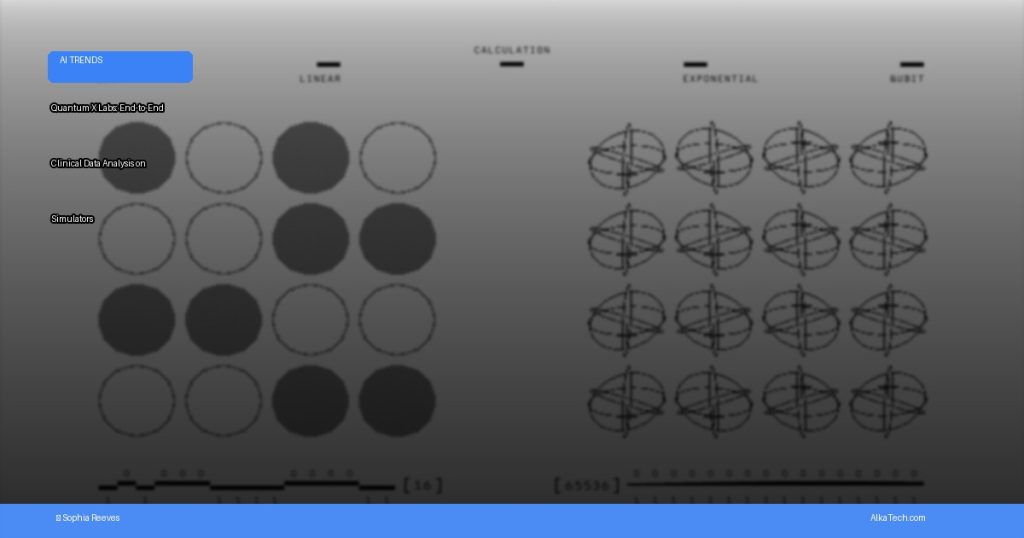
The future of medicine isn’t just about advanced therapies or genetic breakthroughs; it’s increasingly about how we harness and interpret the vast ocean of data surrounding human health. In a landmark announcement this week, Quantum X Labs unveiled a groundbreaking demonstration, showcasing a complete end-to-end Quantum Clinical Data Analysis use case. This pivotal moment illustrates the immense potential for quantum technology to redefine how we approach complex medical challenges.
📋 Table of Contents
According to a GlobeNewswire report on July 29, 2026, Quantum X Labs successfully ran real-world clinical information on a quantum computer simulator, generating biologically relevant analytical insights. This isn’t merely a theoretical exercise; it’s a tangible proof-of-concept that demonstrates the capability of running intricate datasets on a quantum architecture, signaling a new era for data-driven healthcare.
The Dawn of Quantum Clinical Data Analysis

For years, the sheer volume and complexity of clinical data have posed significant hurdles for classical computing. Everything from patient histories and genomic sequences to imaging scans and real-time physiological metrics contributes to an ever-expanding, multi-modal dataset. Traditional AI and machine learning algorithms, while powerful, often hit computational ceilings when attempting to find subtle, non-obvious patterns within this noise. This is where Quantum Clinical Data Analysis emerges as a game-changer.
Quantum X Labs’ demonstration wasn’t just about processing data; it was about extracting meaningful, biologically relevant insights. Imagine the ability to identify previously undetected biomarkers for early disease detection, predict individual patient responses to specific treatments with unprecedented accuracy, or accelerate drug discovery by simulating molecular interactions at a quantum level. This is the promise that quantum computing brings to the medical field, transforming raw data into actionable intelligence that can save lives and improve patient outcomes.
Bridging the Gap: Real-World Data Meets Quantum Simulation
The emphasis on “real-world clinical information” is crucial here. Often, early quantum computing experiments rely on synthetic or simplified datasets to prove algorithmic viability. Quantum X Labs’ decision to use actual, complex clinical data lends significant weight to their findings. It validates that their quantum algorithms and methodologies can handle the messiness and scale inherent in genuine medical records, a critical step towards practical implementation.
While the demonstration utilized a quantum computer simulator rather than a full-fledged quantum hardware machine, this doesn’t diminish its significance. Simulators allow researchers to develop, test, and refine quantum algorithms and architectures without waiting for large-scale, fault-tolerant quantum computers to become widely available. This phase of Clinical Data Simulation is vital for proving the theoretical advantages and practical workflows before transitioning to quantum hardware. It essentially validates the software stack and the conceptual framework, ensuring that when the hardware is ready, the applications are too.
Transforming Healthcare with Quantum Clinical Data Analysis
The implications of this breakthrough for Quantum Computing Healthcare are profound. Personalized medicine, long a tantalizing promise, could become a widespread reality. By analyzing an individual’s unique genetic makeup, lifestyle, and medical history against a vast database of clinical information with quantum speed, doctors could tailor treatments with unparalleled precision, minimizing side effects and maximizing efficacy. Drug discovery, notoriously a lengthy and expensive process, could be dramatically accelerated. Quantum simulations could quickly screen billions of potential drug compounds, identify optimal molecular structures, and predict their interactions with biological systems, drastically reducing the time and cost associated with bringing new medicines to market. (See also: Speed Up Your Slow Windows PC for Free: No Cost Optimization Tips)
Beyond personalized treatments and drug discovery, quantum capabilities extend to areas like diagnostic imaging, where quantum-enhanced algorithms could detect subtle anomalies missed by classical methods, and epidemiological studies, where complex disease patterns could be uncovered from vast population health data. The ability to model complex biological systems, which are inherently quantum in nature, opens doors to understanding diseases at a fundamental level previously inaccessible.
AI in Quantum Medicine: A Synergistic Future
This development firmly places Quantum X Labs at the intersection of two of the most transformative technologies of our era: AI and quantum computing. The category “AI Trends” is particularly apt because quantum computing isn’t just an alternative to classical AI; it’s a powerful accelerant. Quantum algorithms can enhance classical machine learning techniques, providing superior pattern recognition, optimization, and anomaly detection capabilities, especially when dealing with high-dimensional and highly correlated data sets common in medicine. (See also: AI Video Generation: Reality vs. Hype in 2024)
Imagine AI models that, powered by quantum processors, can learn from far less data, generalize more effectively, and identify causal relationships rather than just correlations. This synergistic approach, often referred to as AI in Quantum Medicine, promises to unlock new levels of insight, helping clinicians make more informed decisions and researchers uncover deeper biological truths. The sheer computational power and unique processing capabilities of quantum systems can tackle problems that even the most advanced classical AI supercomputers struggle with, pushing the boundaries of what’s possible in medical diagnostics, prognostics, and therapeutic development.
Looking Ahead: From Simulator to Scale
While the current achievement is on a simulator, the path forward for Quantum X Labs and the broader quantum industry is clear: scale up. The next steps will involve porting these proven algorithms to increasingly powerful quantum hardware as it becomes available, and addressing the practical challenges of integrating quantum solutions into existing clinical workflows. This includes robust data security and privacy measures, given the sensitive nature of clinical information, as well as developing user-friendly interfaces for healthcare professionals who may not have quantum expertise.
The long-term vision is a future where quantum-enabled tools are as commonplace in medical research and practice as MRI machines are today. This demonstration by Quantum X Labs is not just a scientific curiosity; it’s a significant milestone on that journey, proving that the complex, messy world of real-world clinical data can indeed be tamed and illuminated by the enigmatic power of quantum computation. We are truly on the cusp of a medical revolution, where the incomprehensible complexity of human health may finally yield its secrets, thanks to pioneering efforts like this.
❓ Frequently Asked Questions
What did Quantum X Labs demonstrate?
Quantum X Labs demonstrated a complete end-to-end quantum-enabled clinical data analysis use case.
What kind of data was utilized in the demonstration?
They used real-world clinical information to conduct the data analysis.
What platform was used for this demonstration?
The analysis was performed on a quantum computer simulator, showcasing its capability for complex tasks.
What is the key outcome of this quantum-enabled data analysis?
The demonstration successfully generated biologically relevant analytical insights from the clinical data.



Leave a Reply