The AI Paradox: Reshaping Clean Energy Research & Its Future Impact
admin
3 months ago

We’ve all seen the headlines, the breathless promises of AI revolutionizing everything from medical diagnostics to our morning coffee routine. As a tech journalist and a dedicated hardware enthusiast, I’m as excited as anyone about the computational muscle driving these advancements. But there’s a critical conundrum brewing beneath the surface of this digital renaissance: the AI clean energy paradox. This paradox highlights how artificial intelligence, while offering unprecedented tools for accelerating clean energy research and deployment, simultaneously demands an exponentially increasing amount of energy, largely from grids still reliant on fossil fuels. (See also: AI in Software Dev: Revolutionizing Coding Workflows & Efficiency)
📋 Table of Contents
The AI Clean Energy Paradox: A Double-Edged Sword
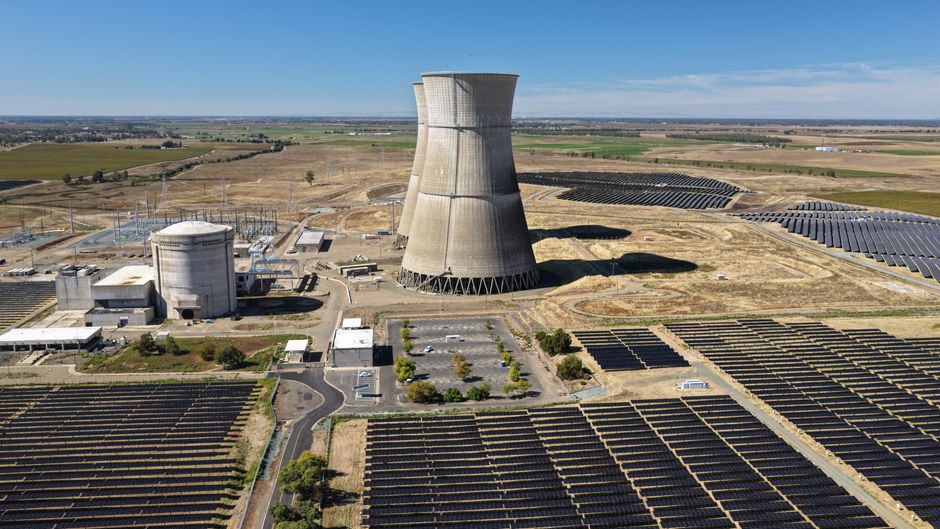
It feels like we’re caught in an epic boss battle – one where our most powerful weapon also drains our health bar at an alarming rate. On one hand, AI is proving to be an indispensable ally in the fight against climate change. Imagine complex algorithms optimizing energy grids in real-time, predicting weather patterns to maximize renewable output, or even designing novel materials for more efficient solar cells and batteries. These aren’t sci-fi fantasies; they are active areas of clean energy research where AI is already making significant strides. Machine learning models can sift through vast datasets of chemical compounds, identifying candidates for next-generation catalysts or superconductors at speeds unfathomable to human researchers. They can simulate plasma behavior in fusion reactors, bringing us closer to the holy grail of limitless energy. For a world grappling with the urgency of decarbonization, AI seems like the ultimate cheat code. (See also: Transforming Software Dev: How AI Reshapes Coding Workflows)
Yet, the very intelligence we’re building comes with a colossal appetite. The relentless march of large language models (LLMs) and the buildout of data centers to support their widespread integration are creating an unprecedented surge in demand for electricity. From your smart thermostat to the foundational models powering entire industries, every query, every inference, every training cycle consumes power. And not just a little. We’re talking about energy footprints that rival small nations, driven by arrays of GPUs that would make any gaming rig look like a calculator by comparison. This escalating AI energy consumption is the other, darker side of the paradox, threatening to undermine the very clean energy gains AI is supposed to help us achieve.
The Insatiable Hunger: Unpacking AI Energy Consumption
Let’s get specific about this hunger. Training a single, cutting-edge LLM can consume as much energy as several homes for an entire year. And that’s just the training. Once deployed, the inference – the process of using the trained model to make predictions or generate text – scales with every user interaction. Multiply that by billions of potential interactions daily, across countless applications, and you start to grasp the scale. Data centers, the physical homes of our digital brains, are notoriously power-hungry. They require not only massive amounts of electricity to run servers and GPUs but also immense energy for cooling systems to prevent critical hardware from melting down under intense computational loads. This isn’t just about the electrons flowing; it’s about the carbon emissions generated if that electricity comes from fossil fuels. It’s a stark reminder that while the digital world feels ethereal, its foundations are deeply rooted in physical infrastructure with very real environmental consequences.
The demand for advanced chips, particularly high-performance GPUs, is skyrocketing. These chips, while incredibly efficient per calculation compared to older hardware, are being deployed at scales never before imagined. This creates a feedback loop: more powerful AI leads to more demand, which leads to more hardware, which leads to more power consumption. The hardware enthusiast in me marvels at the engineering, but the environmentalist in me sees the ever-increasing wattage demands. The industry
❓ Frequently Asked Questions
What is the AI paradox in clean energy?
The AI paradox refers to AI’s dual role: it’s a powerful tool for advancing clean energy research and solutions, but its underlying infrastructure (data centers, LLMs) demands significant energy, often from non-renewable sources.
How do data centers impact clean energy goals?
Data centers, essential for AI, consume vast amounts of electricity for processing and cooling. This high energy demand can strain grids and counteract efforts to transition to clean energy sources if not powered sustainably.
Can AI help achieve clean energy goals despite its consumption?
Yes, AI can optimize energy grids, predict renewable energy output, design more efficient materials, and improve energy storage, all crucial for accelerating the clean energy transition.
What solutions exist for sustainable AI development?
Solutions include developing more energy-efficient AI algorithms and hardware, powering data centers with renewable energy, optimizing data center cooling, and promoting green AI research and practices.



Leave a Reply